Buying a house with a partner in NZ: joint names, KiwiSaver and the paperwork to ask a lawyer about
27 October 2026 3 min read
Buying your first home with a partner usually means two incomes, two KiwiSaver balances and a bigger deposit, which can open up more options. It also means a few decisions you won't make on your own, like how your names go on the title and what happens to the home if things change down the track. Most of it is sorted with your lawyer before settlement, so it's worth knowing the basics early.
Your next step
If you'd like help understanding what the two of you might be able to borrow, we can connect you with someone who can talk through your options, with no obligation.
It takes about 90 seconds, then we put you in touch with someone who can talk through your options, and there's no credit check to enquire.
Key points
- Lenders look at you both together, so both incomes and both sets of debts and spending count.
- You can each use your own KiwiSaver towards the deposit, as long as you each meet the withdrawal rules.
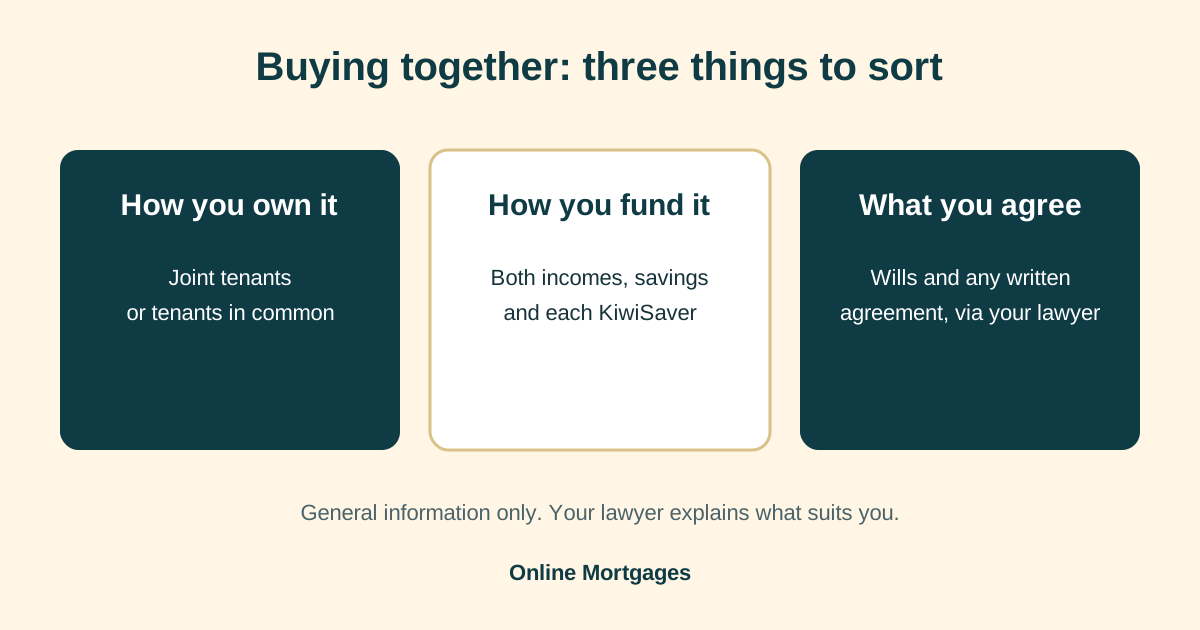
- How your names go on the title matters, and the two main options are joint tenants or tenants in common.
- A family home is usually relationship property, once you've been together three years or more, so uneven contributions are worth raising with your lawyer.
How do lenders look at a joint application?
When you borrow together, the lender assesses you as a pair, adding up both incomes and both sets of debts and spending, and you're usually both responsible for the whole loan rather than half each. Two incomes can lift what you might borrow, but a car loan, credit card or student loan on either side counts too. Our how much can I borrow guide walks through what lenders weigh up, and pre-approval gives you both a clearer picture before you start making offers.
Can we both use our KiwiSaver?
Usually, yes. Each of you applies to your own KiwiSaver provider and has to meet the first home withdrawal rules on your own, so it's worth checking both balances and both membership dates early. The KiwiSaver calculator gives a rough idea of what you could each put in, and our KiwiSaver first-home withdrawal page covers the steps and timing.
Joint tenants or tenants in common: what's the difference?
- Joint tenants: you own the whole home together, and if one of you dies the other automatically owns it all. This is common for couples.
- Tenants in common: you each own a set share, which can be equal or not, and your share goes to your estate rather than automatically to your partner.
What paperwork should we ask a lawyer about?
If you're married, in a civil union or have lived together for three years or more, a home you live in together is usually treated as relationship property under New Zealand law, which generally means it's shared equally if the relationship ends, whatever each of you put in and however the title reads. Shorter relationships can be treated differently. If one of you is putting in a lot more, such as a bigger KiwiSaver balance or a gift from family, you can ask your lawyer about a contracting out agreement, often called a prenup, that records something different. For that kind of agreement to hold up, you'll each need your own lawyer to advise you and certify your signature, so it pays to start the conversation well before settlement.
What about buying with friends or family instead?
The ownership options are the same, but relationship property rules don't usually apply, so a written co-ownership agreement matters even more. Our guide to buying a first home with friends or family goes into that.
Buying with a partner FAQs
Do we both need to be on the mortgage?
Usually, if you're both on the title you'll both be on the loan, and each of you is responsible for all of it, not just half.
Does it matter if one of us is putting in more?
It can. Once you've been together three years or more, a home you live in together is usually treated as relationship property, so if your contributions are uneven, talk to your lawyer about whether a written agreement makes sense for you.
What's the difference between joint tenants and tenants in common?
Joint tenants own the home together, and if one of you dies the other automatically owns it all. Tenants in common each own a set share, which goes to your estate rather than automatically to the other owner.
Can someone help us understand what we can borrow together?
Yes. We can connect you with someone who can talk through your options and what lenders tend to look at for a joint application.
General information only, not advice. We're a referral service and may receive a commission.
Sources (checked 27 October 2026):
- Settled.govt.nz glossary: joint tenancy and tenants in common
- New Zealand Law Society: property law FAQs, forms of joint ownership
- Ministry of Justice: dividing relationship property, written agreements and independent legal advice
- Inland Revenue: getting your KiwiSaver for your first home
- Consumer Protection (MBIE): What lenders must do, affordability and suitability checks
Reviewed against Settled.govt.nz glossary, New Zealand Law Society, Ministry of Justice, Inland Revenue and Consumer Protection.
Related reading